Check Training Behind Credentials
Start by separating proof of training from proof of sound judgment on site. A useful credential should relate to sewage affected building materials, controlled removal, cleaning, disinfection, and drying; the contractor should explain how that learning guides the work. Then compare the safety approach, the written tasks and records, and the plan for work beyond cleanup. These checks let you assess what the pros we connect you with can demonstrate, rather than relying on a title alone.
Ask whether the credential is current and whether its issuer provides a way to verify it. Ask what topics the credential covers and which person on the project has that training. Then listen for a clear link between the training and the decisions the contractor will make if sewage has reached absorbent materials, finished surfaces, or more than one room. A qualification matters when it helps the team recognize what needs removal, what can be treated, and what must dry.
Judge Safety Decisions on Site
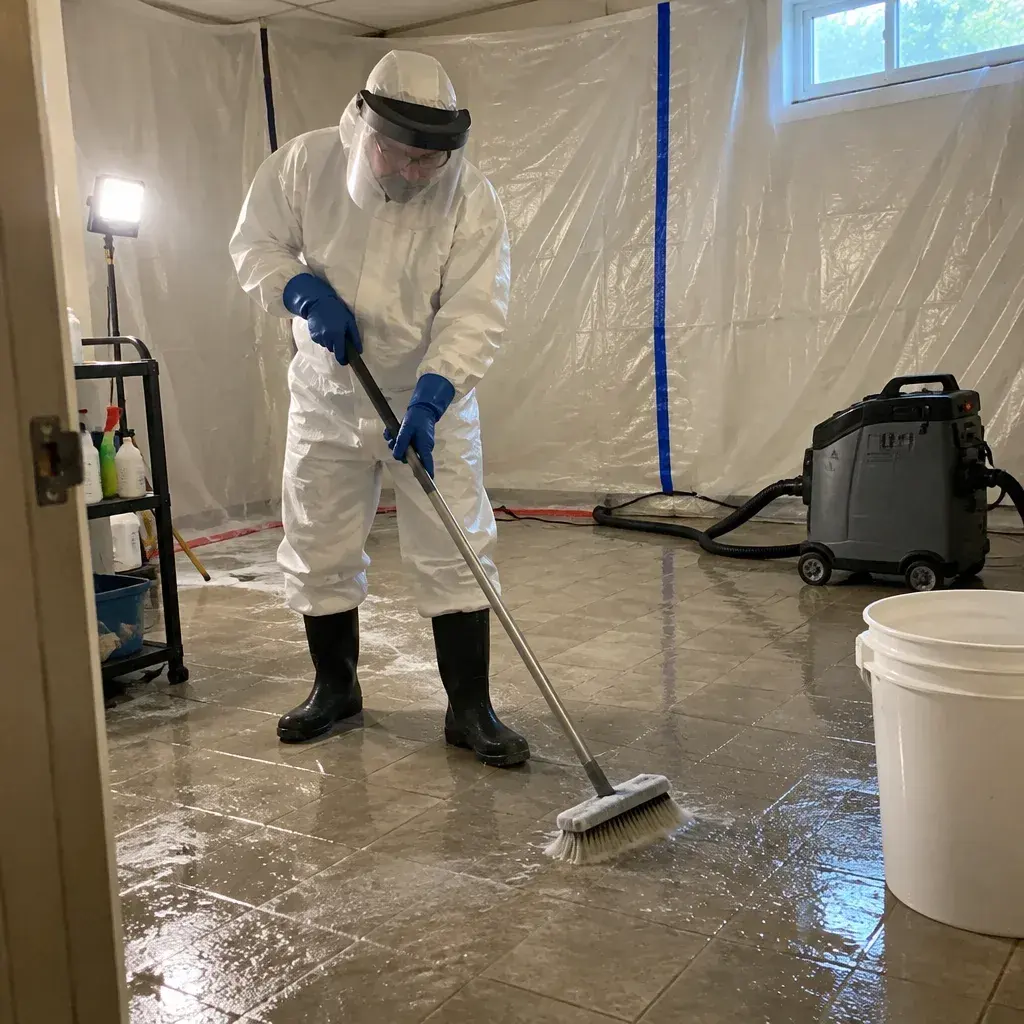
Judge safety by how the contractor plans to control the affected space while work is underway. Containment separates contaminated areas from cleaner parts of the building, limiting the movement of dirty water and debris. If a basement backup has reached a hallway, for example, ask how the work plan accounts for that path and limits access through it. Ask how clean equipment will be kept apart from contaminated tools during the work.
The explanation should also show that workers know how to clean and disinfect materials in the right sequence. Ask how they will decide which surfaces need treatment and how product instructions guide its use, including stated contact periods and safety directions. Disinfection cannot make an unclean surface ready for drying by itself. A contractor who can describe these steps in plain terms gives you a clearer way to judge whether the crew understands the work its training is meant to support.
Review Scope and Job Records
Ask whether visible conditions will be documented before cleanup changes the affected areas. It should make clear how the team will handle sewage removal, affected materials, surface treatment, odor work, and drying when those tasks apply. If inspection reveals additional contaminated material, the document should give you a way to review the change before work expands. Clear boundaries help you compare the plan with the conditions at your property.
Good documentation lets you follow what happened, material by material, as the cleanup proceeds. Ask what records you will receive, such as dated progress notes, images of affected areas, and a list of items removed or treated. These details can help show the condition of the building and the steps taken if you need to discuss a claim with your insurer; coverage still depends on your policy. Records should connect the initial assessment to the work completed, so decisions do not disappear once equipment is gone.
Confirm Trade Roles and Referrals
Start by checking whether the pros we connect you with have sewage cleanup certification or other relevant training, and ask who issued each credential; this work has no state license. Then ask how workers limit exposure, separate affected rooms from clean spaces, and handle contaminated materials. Request a written scope that names planned work, materials for removal, surfaces for cleaning, and drying, along with records of completed steps. Confirm who will handle tasks outside that scope and how changes will be documented before agreeing to work.
Check what the referral represents before treating it as proof of a contractor’s qualifications. Some places have their own pages; requests in other covered areas connect through the same referral. Keep the request details available when you ask the contractor to explain the proposed cleanup. Wherever you are, apply the same checks to the pros we connect you with: relevant training, a workable safety plan, a defined scope, useful records, and clear trade boundaries.
Dealing with a sewer backup in your home?
Check where the water surfaced and whether it reached flooring edges or wall bases; the affected boundary helps a provider assess which materials need attention. This site has dedicated pages for Florida, Delaware, California, Arizona, Alabama, Connecticut, Arkansas, and Colorado. In other covered areas, requests use the site’s referral route. Call (877) 386-0069 to ask which pros we connect you with can assess your location, when they are available, and whether a visit charge applies. A cleanup provider can outline the indoor work; a plumber should diagnose and repair the sewer source.