Begin With the Visible Area
Start by noting where sewage is visible, which surfaces it reached, and whether the boundary is clear. Then consider whether you can assess every affected part without entering contaminated areas. A change in flooring or a closed door can make the visible boundary harder to follow. If the spread is unclear or contact seems likely, professional sewage cleanup is the safer choice. The pros we connect you with can assess the affected materials and determine what cleanup may involve.
Porous materials can absorb sewage instead of keeping it on the surface. Pay attention to staining, dampness, or odor beyond the obvious spot, especially where an affected area meets walls or continues out of sight. These clues do not prove how far sewage traveled, but they make a confident DIY sewage cleanup assessment harder. Odor can linger after visible moisture has faded. If you cannot judge the boundary without approaching sewage, contact a cleanup professional.
Signs the Sewage Spread Further
The number of affected spaces and the way they connect can indicate whether the cleanup is manageable to assess yourself. Sewage appearing in more than one room, or signs that it continued beyond an open floor, may point to a wider area than the visible portion suggests. Hidden spread matters because contaminated water or debris can cross into places you cannot readily inspect. When you cannot trace the affected area from a safe position, a professional assessment can clarify the scope.
Check whether dampness or staining continues past a doorway, follows a floor edge, or appears in a neighboring room. Those signs suggest sewage may have reached beyond the place where you first noticed it. An odor in an area that looks dry can point to contamination in materials you cannot see. DIY sewage cleanup is difficult to assess when flooring, wall coverings, or other porous materials may have absorbed sewage. If you cannot judge how far it traveled or which materials can be cleaned, contact the pros we connect you with for professional sewage cleanup.
How Materials Affect Cleanup
Notice what the sewage touched. A hard, exposed surface gives you a different basis for judging cleanup than a material that can soak up liquid. If you see contamination on absorbent flooring or other porous building material, its condition may be difficult to assess from the surface alone. Sewage can remain within material that looks unchanged outside. When you cannot tell whether the contamination stayed on the surface, professional sewage cleanup can determine whether material may be cleaned or needs removal.
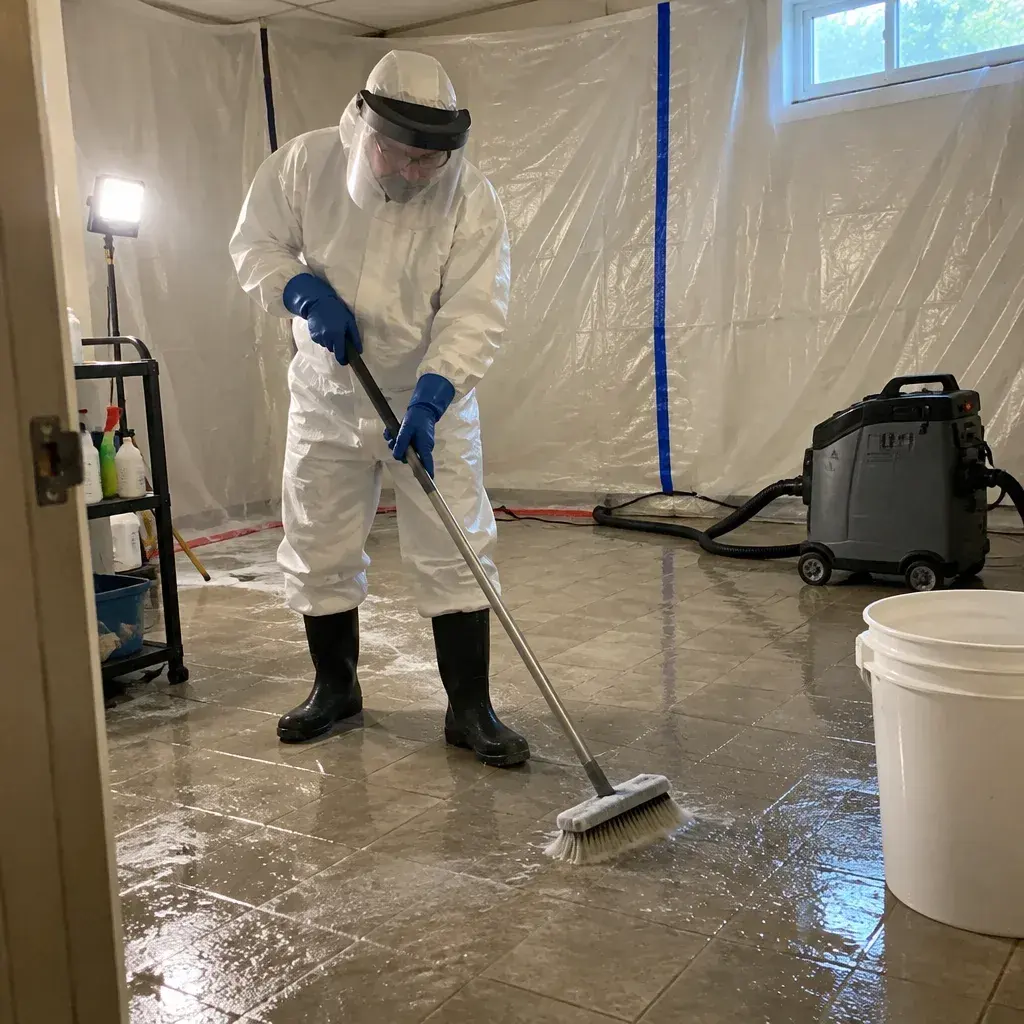
Household cleaning has limits when sewage reaches porous material. Cleaning a visible surface does not establish that liquid or contamination has been removed from what lies beneath it. In professional cleanup, affected materials are assessed for removal, cleaning, or drying; surfaces that remain are cleaned and disinfected, and building materials may need drying after extraction. These steps depend on the extent of contamination. If the material is absorbent or its condition is unclear, a professional can assess it before you decide whether DIY cleanup is appropriate.
When to Hire a Cleanup Professional
Hire a cleanup professional when you cannot safely reach the affected area, cannot tell where the sewage went, or see signs it reached absorbent materials. The same choice makes sense when several spaces may be involved or household cleaning cannot address what you observe. Professional sewage cleanup handles contamination inside the structure, including assessment, removal of affected material when needed, cleaning, disinfection, and drying. Stopping active flow can help prevent additional sewage from reaching cleaned materials.
DIY sewage cleanup may be an option only when the affected area is clearly limited, the surfaces are plainly assessable, and you can avoid contact with sewage. If any of those points is uncertain, note what you can observe from a safe position and contact a qualified cleanup professional. Describe which rooms and materials appear affected, along with any signs of spread beyond the visible area. That gives the pros we connect you with a useful starting point for assessing the work.
Dealing with a sewer backup in your home?
Check where the water surfaced and whether it reached flooring edges or wall bases; the affected boundary helps a provider assess which materials need attention. This site has dedicated pages for Florida, Delaware, California, Arizona, Alabama, Connecticut, Arkansas, and Colorado. In other covered areas, requests use the site’s referral route. Call (877) 386-0069 to ask which pros we connect you with can assess your location, when they are available, and whether a visit charge applies. A cleanup provider can outline the indoor work; a plumber should diagnose and repair the sewer source.