Check Which Rooms Remain Usable
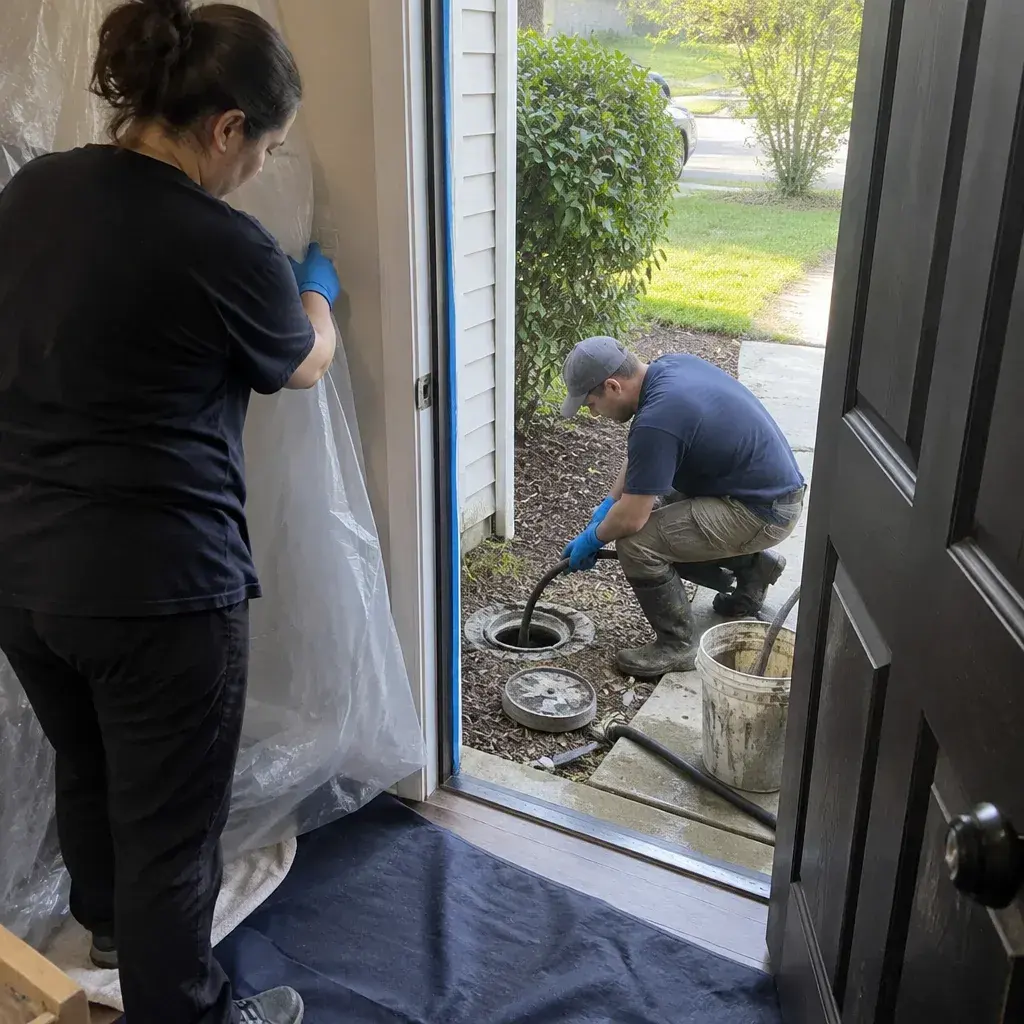
Start by asking where the pros we connect you with will place containment and how sewage, debris, and equipment will move through the home. A barrier can separate clean rooms from the work area, but an access route may cross a hall, stairway, or doorway you rely on. If you cannot reach an exit or necessary room without crossing that route, ask whether the boundary can be adjusted or whether you should stay elsewhere during active work. The answer depends on the layout and cleanup plan.
Check whether you can use the remaining rooms without passing through the cleanup zone. For example, a bedroom and bathroom may be untouched, yet a shared hall or the only exit may run beside the work. Workers need room to move equipment and carry out affected materials, so their route can limit access to nearby spaces. Ask the provider to explain which paths stay open and whether the layout leaves your household a practical way to move around.
How Containment Separates Work
Containment is the separation between the cleanup area and rooms intended to remain clean. Household members may need to avoid crossing the boundary during active work. A closed door alone may not define the work boundary; ask the provider where barriers will be placed and which side your household should use. This helps you understand whether the unaffected portion of your home can stay apart from active work.
The cleanup boundary follows what the assessment finds, not simply the first visible patch. The assessment also helps identify which surfaces can remain in place. If the work expands into a connecting room, the usable area may shrink or a route may close. Ask how the provider will tell you about a changed boundary and which rooms or passages should then be treated as part of the work zone.
Consider Household Health Needs
Household circumstances matter once the work boundary is mapped. Tell the provider if someone has a health concern, needs help moving through the home, or may have difficulty following access limits; those details can affect whether remaining indoors is practical. Ask which doors and routes will be unavailable, and whether anyone should leave while work is active. If the guidance is unclear, request an explanation before cleanup proceeds. The provider can describe how the plan applies to your home.
Pets and household routines also affect whether separation will hold. A dog that needs to cross the hall, a cat that slips through a doorway, or a caregiver who must reach a closed room can make the proposed boundaries hard to maintain. Tell the provider about these needs before deciding where people will stay. Follow the safety directions you receive, and keep household members and pets away from sewage-contaminated areas during the work.
Know When to Leave
Change plans if the affected area grows, a barrier is disturbed, or an essential route becomes part of the work zone. Pause use of the space and contact the cleanup provider for updated direction; do not enter or handle contaminated materials yourself. If household members cannot stay safely apart from the work, arrange to leave while cleanup is active. The provider can explain the revised boundaries and whether the remaining rooms still make sense to use.
Household health needs can affect whether staying home is workable. Ask what safety steps apply to children, pets, or anyone with a health concern, and whom to contact if conditions change. Those answers let you judge whether staying home during sewage cleanup is practical for your household. When any part is unclear, request specific guidance before using that space.
Dealing with a sewer backup in your home?
Check where the water surfaced and whether it reached flooring edges or wall bases; the affected boundary helps a provider assess which materials need attention. This site has dedicated pages for Florida, Delaware, California, Arizona, Alabama, Connecticut, Arkansas, and Colorado. In other covered areas, requests use the site’s referral route. Call (877) 386-0069 to ask which pros we connect you with can assess your location, when they are available, and whether a visit charge applies. A cleanup provider can outline the indoor work; a plumber should diagnose and repair the sewer source.